Showing posts with label DAYS. Show all posts

25 July 2021

ASTROTHEOLOGY LESSON

ASTROTHEOLOGY LESSON

The word “Pastor” comes from Pa-stor, “Pa” meaning great or father, “Stor” or ASTER meaning Star (Greek word for stars is asteria). Therefore, the etymology of Pastor means the Great Star or the Father Star, or ... Sun God. 

“Minister and Ministry” come from Min and Aster. “Min” was the common ancient term and root of MOON whereas Aster, Stir, Stor all relate to STAR. Thus Minister is “MoonStar.” Monastery, monk, and month have the same origin. This is also where we get “Minute.” 

This is a title that derives from the lunar and stellar cults. This explains why there is a minute hand on a watch. The three hands of a watch relate to the THREE PLANETS associated with TIME. 

The slow hand is the hour hand, meaning “Horus,” representing the SUN. The minute hand is for Min, representing the MOON. And, the swift ticking second hand is for MERCURY, the planet which rotates fastest of all, both around the sun, and on its own orbit. This is why the figure of the god Mercury was depicted with wings on his shoes or feet.

Also, Have you ever wondered how the names of the Days of the Week originated? The Roman people, as did many other ancient civilizations, named the days of the week after the sun, moon and planets, which were considered to be gods.

Sunday Meaning: The Sun's day.

Monday Meaning: The Moon's day.

Tuesday Meaning: Tiw's day; the Old Norse's equivalent to planet and god of Mars. 
Note: Tyr, Old Norse Týr, Old English Tiw, or Tiu, one of the oldest gods of the Germanic peoples and a somewhat enigmatic figure. He was apparently the god concerned with the formalities of war—especially treaties—and also, appropriately, of justice.

Wednesday Meaning: Woden's day: the Old Norse's equivalent to Mercury. 
Note: Woden was widely known as a god of war, but he was important also as a god of learning, of poetry, and of magic. His wife was Frigg, and his children included Thor, Balder, and Tiw. He was identified with the Roman god Mercury, and among Germanic peoples Mercury's day became Woden's day (Wednesday).

Thursday Meaning: Thor's day: Old Norse's equivalent to Jupiter. 
Note: Thor was the most popular of all the gods. He was a god of war and fertility. He created thunder and lightning as he rode over the clouds in a chariot drawn by goats, swinging his hammer Mjöllnir.

Friday Meaning: Frigg's/ Frica's day: Old Norse's equivalent to Venus. 
Note: Frigg is the Queen of Asgard and the highest of the goddesses. She is the goddess of motherhood and is herself the mother of Balder, Hodor and Hermod. ... Frigg is also the goddess of marriage and her name comes from the verb “fríja” meaning “to love.”

Saturday Meaning: Saturn's day. 
Note: Saturn, Latin Saturnus, in Roman religion, the god of sowing or seed. ... In Roman myth Saturn was identified with the Greek Cronus. Exiled from Olympus by Zeus, he ruled Latium in a happy and innocent golden age, where he taught his people agriculture and other peaceful arts. In myth he was the father of Picus.

Astrotheology has played an important role in the history of civilization. Astrotheology is a field of study that explores the role that the stars, sun, moon, and other “heavenly bodies” have played in the formation of various religious systems. This field can study anything from ancient mythological systems utilized by Romans, Greeks, Egyptians, and Sumerians to more modern religions and the origins of various traditions and practices. 

The basic purpose of astrotheology is to study various religious concepts with regard to astronomical objects and how they have influenced these religions and mythological systems. Some of the most basic studies in this field involve ancient mythological systems that often ascribed divine origin or identities to various objects in the sky. From the descriptions above, you will notice that inn these systems, the moon was often described as a feminine figure and the sun was frequently given masculine traits. Various gods and goddesses in different systems were connected to different astronomical bodies, such as the names of nearby planets, and through astrotheology these practices can be better understood.

The observance and concept of God is ever present in the celestial heavens ... seen in annual recurring cycles. The Eternal Universe, regenerating itself, from within itself. A constantly recycling infinite mass of energy of which all of us are within, and a part of. Not as individual members ... things ... but as ONE thing. Eternal bound by the consciousness that brings Life to ALL form.

u·ni·verse
/ˈyo͞onəˌvərs/
noun
all existing matter and space considered AS A WHOLE; the cosmos.

“For in him we live, and move, and have our being; as certain also of your own poets have said, For we are also his offspring.”
~ACTS 17:28

Just a thought … 

Justin Taylor, ORDM.


31 January 2021

NAME ORIGINS OF MONTHS AND DAYS

NAME ORIGINS OF MONTHS AND DAYS

Did you ever wonder why the months and days are named the way they are? When you see the answers, you might be surprised.

Meanings of our Months:

The word “Month” comes from the word “Moon” so our Months should be from New Moon to New Moon.

JANUARY
Named for the Roman god Janus, “god of doorways” and new beginnings.

FEBRUARY
Named for the Roman festival of purification “Februa.”  The first day of the Carnival season is always January 6th (which is twelve days after Christmas). This is called the Twelfth Night (Kings Night).

MARCH
Named for the Roman God Mars, who was the god of war and guardian of the state. Mars was the Father of Romulus and Remus, the founders of Rome.

APRIL
From the Roman calendar month of Aprilis. Considered a sacred month for the goddess Venus. April also comes from the Latin word aperire meaning “to open” refering to a spring season, opening of the flowers and leaves.

MAY
Named for the Greek goddess Maia, the daughter of Atlas and one of the Pleiades.

JUNE
Named for the goddess Juno, wife of Jupiter and queen of the heavens and gods.

JULY
Named for Julius Caesar in 44 BC. The month originally had the Roman name of Quintilis (meaning five).

AUGUST
Named for the Roman Emperor Augustus in 8 BC. The month was formerly known as Sextilis ( meaning six).

SEPTEMBER
From the Latin word “septem” meaning seven, which was the seventh month of the calendar. (Yet we use it as the ninth month)

OCTOBER
From the Greek word “octo” meaning eight, which was the eight month of the calendar. (Yet we use it as the tenth month)

NOVEMBER
From the Latin word “novem” meaning nine, which was the nineth month of the calendar. (Yet we use it as the eleventh month)

DECEMBER
From the Greek word “decca,” and the Latin word “decum”  meaning ten, which was the tenth month of the calendar. (Yet we use it as the twelfth month)

The Seven-Day Week:

The Babylonians marked time with lunar months, as opposed to the Romans who used Solar calendars as we do today. They proscribed some activities during several special days of the month, particularly:

First - the first visible crecent, seventh - the waxing half moon, fourteenth - the full moon, nineteenth - dedicated to an offended goddess, twenty-first - the waning half moon, twenty-eigth - the last visible crecent, twenty-nineth - the invisible moon, and thirtieth (possibly) - the invisible moon.

The major periods are seven days, 1/4 month, long. This seven-day period was later regularized and disassociated from the lunar month to become our seven-day week. There are actually 4.3 weeks to an average months.

The Naming of the Days:

The Greeks named the days of the week after the sun, the moon and the five known planets at the time, which were in turn named after the gods Ares, Hermes, Zeus, Aphrodite, and Cronus. The Greeks called the days of the week the Theon hemerai “days of the Gods.” The Romans then substituted their own equivalent gods for the Greek gods, Mars, Mercury, Jove (Jupiter), Venus, and Saturn. The two pantheons are very similar. The Germanic peoples generally substituted roughly similar gods for the Roman gods, Tiu (Twia), Woden, Thor, Freya (Fria), but did not substitute Saturn. so the list goes like this:

Sunday - Sun's day
Middle English sone(n)day or sun(nen)day
Old English sunnandæg “day of the sun”
Germanic sunnon-dagaz “day of the sun”
Latin dies solis “day of the sun”
Ancient Greek hemera heli(o)u, “day of the sun”

Monday - Moon's day
Middle English monday or mone(n)day
Old English mon(an)dæg “day of the moon”
Latin dies lunae “day of the moon”
Ancient Greek hemera selenes “day of the moon”

Tuesday - Tiu's day
Middle English tiwesday or tewesday
Old English tiwesdæg “Tiw's (Tiu's) day”
Latin dies Martis “day of Mars”
Ancient Greek hemera Areos “day of Ares”
Tiu (Twia) is the English/Germanic god of war and the sky. He is identified with the Norse god Tyr.
Ares, Greek god of war.
Mars is the Roman god of war. Ares is the Greek god of war.

Wednesday - Woden's day
Middle English wodnesday, wednesday, or wednesdai
Old English wodnesdæg “Woden's day”
Latin dies Mercurii “day of Mercury”
Ancient Greek hemera Hermu “day of Hermes”
Woden is the chief Anglo-Saxon/Teutonic god. Woden is the leader of the Wild Hunt. Woden is from wod “violently insane” + -en “headship.” He is identified with the Norse Odin.
Mercury is the Roman god of commerce, travel, theivery, eloquence and science. He is the messenger of the other gods.
Hermes is the Greek god of commerce, invention, cunning, and theft. He is the messenger and herald of the other gods. He serves as patron of travelers and rogues, and as the conductor of the dead to Hades.

Thursday - Thor's day
Middle English thur(e)sday
Old English thursdæg
Old Norse thorsdagr “Thor's day”
Old English thunresdæg “thunder's day”
Latin dies Jovis “day of Jupiter”
Ancient Greek hemera Dios “day of Zeus”
Thor is the Norse god of thunder. He is represented as riding a chariot drawn by goats and wielding the hammer Miölnir. He is the defender of the Aesir, destined to kill and be killed by the Midgard Serpent.
Jupiter (Jove) is the supreme Roman god and patron of the Roman state. He is noted for creating thunder and lightning.
Zeus is Greek god of the heavens and the supreme Greek god.

Friday - Freya's day
Middle English fridai
Old English frigedæg “Freya's day”
composed of Frige (genetive singular of Freo) + dæg “day” (most likely)
or composed of Frig “Frigg” + dæg “day” (least likely)
Germanic frije-dagaz “Freya's (or Frigg's) day”
Latin dies Veneris “Venus's day”
Ancient Greek hemera Aphrodites “day of Aphrodite”
Freo is identical with freo, meaning free. It is from the Germanic frijaz meaning “beloved, belonging to the loved ones, not in bondage, free.”
Freya (Fria) is the Teutonic goddess of love, beauty, and fecundity (prolific procreation). She is identified with the Norse god Freya. She is leader of the Valkyries and one of the Vanir. She is confused in
Germany with Frigg.
Frigg (Frigga) is the Teutonic goddess of clouds, the sky, and conjugal (married) love. She is identified with Frigg, the Norse goddess of love and the heavens and the wife of Odin. She is one of the Aesir. She is confused in Germany with Freya.
Venus is the Roman goddess of love and beauty.
Aphrodite (Cytherea) is the Greek goddess of love and beauty.

Saturday - Saturn's day
Middle English saterday
Old English sæter(nes)dæg “Saturn's day”
Latin dies Saturni “day of Saturn”
Ancient Greek hemera Khronu “day of Cronus”
Saturn is the Roman and Italic god of agriculture and the consort of Ops. He is believed to have ruled the earth during an age of happiness and virtue.
Cronus (Kronos, Cronos) is the Greek god (Titan) who ruled the Universe until dethroned by his son Zeus.

And there you have it. Planets, Gods, Celestial Affairs, Multicultural, and you probably had no clue as to where these common everyday names came from. Hopefully, this will clear things up a bit. 

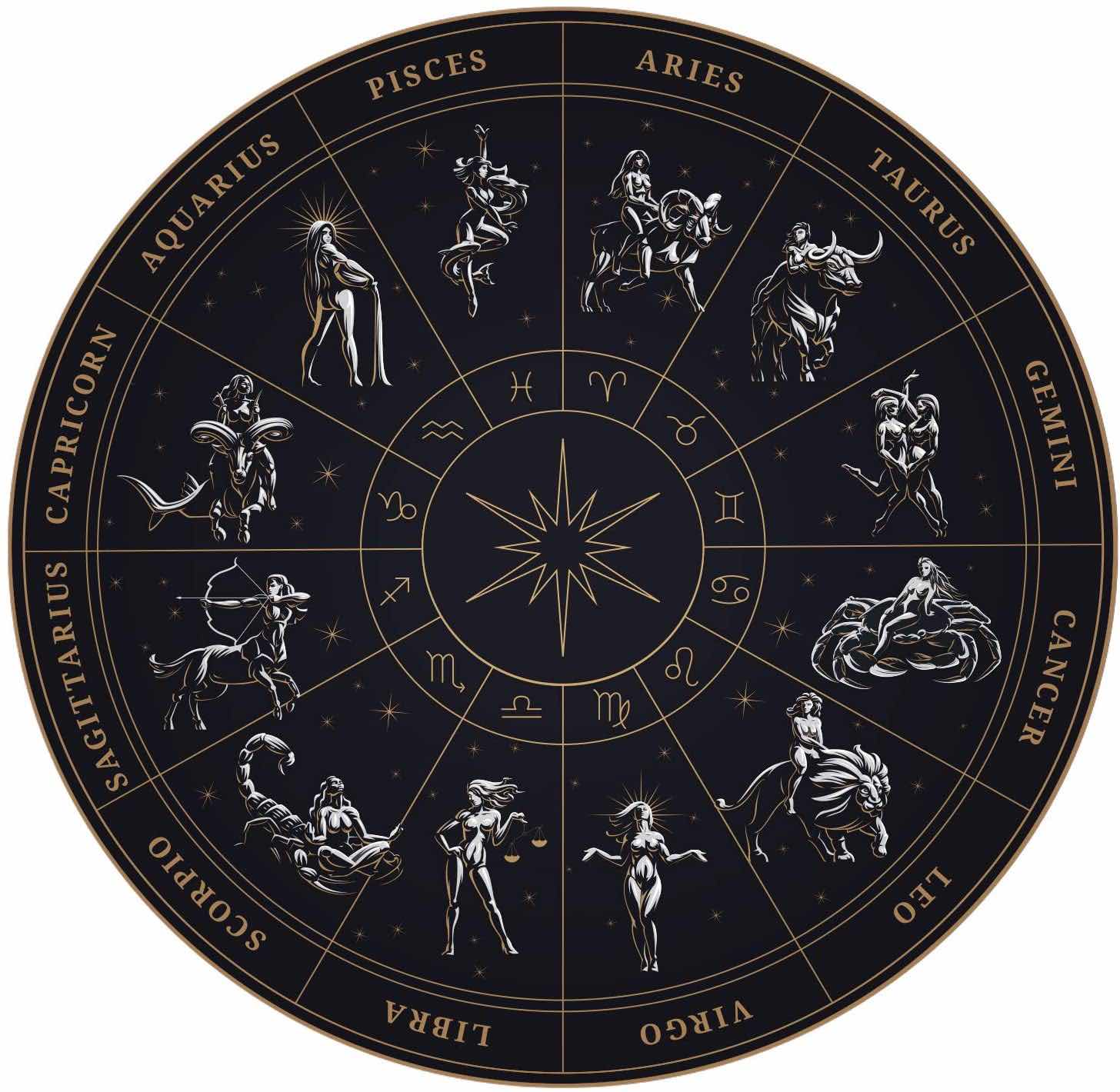
The ancient "Sabbath" was on Saturday for the Hebrews. Saturnday was reserved for the time when people worshipped the god Saturn which eventually led to the rings around our fingers at marriage, and the halos and the sacred eternal 360 degree circle of god and the Zodiac. After the adoption of Roman re-written Christianity, things were change to worship the Sun of God ... as Jesus represented. The center of the Zodiacal Sun surrounded by the 12 houses of the Zodiac - the 12 Apostles. 

Just a thought ... 

Justin Taylor, ORDM.