Showing posts with label myth. Show all posts

01 April 2022

SYMBOLISM CONTAINED IN BIBLICAL SCRIPTURE

SYMBOLISM CONTAINED IN BIBLICAL SCRIPTURE

We begin this article with a very short scripture quote from the Bible:

"Which things are an allegory: for these are the two covenants ..."
~Galatians 4:24 

Right here were are told in plain simple terms, that the story of Abraham, Sarah, and Hagar, is an allegory. It is metaphorical. Myth ... with a hidden deeper meaning, rather than being primarily a physical, historical, and literal event. Science and biology tell us 90 years old women cannot have babies. This is a story of symbolic value. It isn't commentary, it is saying to us directly that it is allegorical. There is symbolism in this myth that is intended for discovery by those who have eyes to see, and ears to hear. Keep in mind that the modern definition of myth does not suit the etymology of the word. A myth (Greek: mythos) is a surface story that is passed along and is usually intended to teach a deeper lesson, it is Truth, veiled by a story intended to deliver a stealth message to those white eyes to see and ears to hear. 

This goes hand-in-hand with us being told in scripture NOT to take the letter literally (scripture/hand written letter) by reminding us to NOT be a Minister of the letter. The Bible communicates to us in Parables, Proverbs, Allegories, and Dark Sayings. Modern day Archaeologists from the University of Tel Aviv have even told us the Bible stories are meant to be symbolic and allegorical. For example, the captivity in Egypt is a metaphor for our own dark ego animal based mind. "Aigyptos" in Greek meant "dark place." It was a symbol of darkness and base nature man. 

The Exodus, was also allegorically symbolic. Leaving the darkness (Egypt) and entering the Promised Land (Is-Ra-El) and Jerusalem (yeru-shalom) the place of peace. Again, a spiritual event that takes place within us as we transmute from base nature to Divine. Generations have searched for the literal places in the Bible but to no avail. Either they were built and named in honour of the symbolism, or they simply did not exist. The Ten Commandments (the negative commandments) were derived directly from King Hammurabi's Code. A list of negative commandments of things NOT to do that preceded the Hebrews by hundreds of years. These codes are on display in the British Museum. 

Joshua of the Old Testament, the one who conquered Israel, is the same story as Jesus of the New Testament. The very name itself is the same. Joshua from the Hebrew, and Jesus from the Greek, are "Yehoshua, Yeshu, Yeshua" literally a word composed of Hebrew aleph-bet (alphabet) symbols that mean "God is Saviour." There was wandering in the desert for 40 years in the OT, there was a flood of 40 days and 40 nights in the OT, Jesus wandered in the wilderness for 40 days in the NT ... this is symbolism to present deeper esoteric teachings. Forty weeks is the gestation period of a human being (9 months). From conception, to birth ... marking a new person with new beginnings. A "born again" time frame. Everything is symbolic. 

Even top officials from Universities in Israel today will tell us the Bible stories and the history of the Hebrews are not just literal historical events. Joshua could not have knocked down the walls of Jericho because Jericho didn't exist at that time. Jesus could not have been "of Nazareth" because there was no Nazareth at that time (it meant Nazarene). Camels were not domesticated at that time. So if so many of these stories were never intended to be taken literally and historically, then what happened? the what do they mean on a deeper level? There must be something beyond the surface story. These secret Truths were taught to initiates into the Mystery Schools of old. And by taking these stories to be only literal, it has wreaked havoc all over the world for centuries. War and violence, degradation of women, child abuse, lies and deceptions, and a total misunderstanding and mistranslation of the true nature of life, and ourselves as being the Light of the world. 

The Bible characters, locations, stories, miracles, crucifixion, resurrection, raising of the dead, ascension, transfiguration, crossing of the Red Sea, Mt. Sinai, all allegory. All meant as metaphor by the writers. All Myth ... "Mythos." Joseph Campbell put it wisely when he described "myth" as "something that never was, yet always is." We must go beyond the names, places, and events ... deep between the black and white letter, and find the pearl of great price. The Truth, that lies in waiting ... for Revelation - to be revealed, uncovered, unhidden. The letter killeth, but the Spirit giveth Life.

Just a thought ... 

~Justin Taylor, ORDM.


04 March 2022

MYTH AND THE TRUTH CONTAINED WITHIN

MYTH AND THE TRUTH CONTAINED WITHIN

It has been said that “Myths are things that never happened but always are.” This quote is attributed to the 4th century Roman historian and mystic Sallustius. It describes the allegorical nature of Mythology and suggests that they contain behind their often fairy tale and fantastical nature, hidden Truths and higher meanings. 

Two quotes from the brilliant Joseph Campbell:

“All religions are true but none are literal.” 

― Joseph Campbell

“Myth is much more important and true than history. History is just journalism and you know how reliable that is.” 

― Joseph Campbell

The Bible is a message system ... a collection of myths, allegories, and metaphors containing deeper meanings that what lies at the surface. Scripture is abundantly filled with these hidden meanings presented in each chapter and verse. This was the design at its inception, by its original writers. Mystical meanings were hidden in the text, in the names, in the geography, in the nationalities, and in the stories ... for a purpose and for a deeper message. 

Take the names in the genealogy of Adam to Noah, and you will have a summary of the intended message ... in it's esoteric form. Designed, premeditated, intentional, and meant  for us to find ... when we earnestly look for it.

For example, when discovering the root meanings of each genealogical name written in Genesis (in the original Hebrew), and then put in order ... you will find this revelation:

Adam – Man
Seth – Appointed
Enosh – Mortal
Kenan – Sorrow
Mahalalel – The blessed God
Jared – Shall come down
Enoch – Teaching
Methuselah – His death shall bring
Lamech – Despair
Noah – Comfort and rest

Now, put those meanings into a complete sentence and you get: 

"Man appointed mortal sorrow, the blessed God shall come down teaching. His death shall bring despair comfort and rest."

The ancient Hebrews, and many other civilizations before them, used symbols to code their meanings. This was for many reasons. One of the simplest reasons was to separate an exoteric (outward) message for the masses, and an esoteric (inward) message for the initiates into the mysteries. 

When studying ancient spiritual scripture and writings, the original language(s) is paramount for understanding the intent and for translating property the apocalyptic (revealing what was hidden) style of the writers. There were no movies, books, or Internet back then as a means of entertainment. People told stories, and passed them down by word of mouth. It was ok to change things ... if it provided the listener with a deeper meaning or teaching. This was mythos (myth).

In a sense, Myths are stories that talk about the higher things and the more profound subject matters. They deal with the important issues that deal with God, cosmic origins, ultimate conclusions, purpose and destiny. They derive from humankind’s quest to answer the big questions concerning the nature of the Divine, the nature of reality, the human condition, consciousness, higher powers and our relationship to those higher powers. They deal with the meaning of Life.

Always look beyond the letter of the law. As it states for us in 2 Corinthians 3:6:

"... who also hath made us able ministers of the New Testament (new covenant); not of the letter, but of the spirit: for the letter killeth, but the spirit giveth Life."

Look for, meditate on, contemplate, and research within for the meanings behind the written story. Look between the black and white ... read between the lines. Divine Spirit will speak to you from within ... that still small voice. You'll know what vibrates the Truth, and what illusion is presented by it's disharmony. 

~Justin Taylor, ORDM.


15 February 2022

HEBREW CONNECTION TO SATAN

HEBREW CONNECTION TO SATAN

Among the ancient beliefs of Zoroastrianism, the Persian Magi (Astrologers and Zoroastrian Priests) turned some Hindu concepts around, and with them the Asuras were good and the Devas bad. "Ahura Mazda," the god was good, his counterpart "Ahriman" was bad ... the devil of sorts. So there was now evil and good. Therefore, there was between the god and the devil the waging of a perpetual war. And why not?  Man has always been at war with himself, so why not the Gods as well?
 
Read this quote from Author Gerald Messandé: “The early framework of the three monotheisms (Judaism, Christianity, Islam) had been erected. The Devil's birth certificate was filled out by an Iranian prophet (Zoroaster).” Although, this is really only partly true, his full birth certificate was filled out by those who had changed the religion to what many contemporary followers of that faith believe today. And also, mixed in a bit from here and there, along with other religions and philosophical systems to create a conglomerate system. 
 
Now we move forward to the Hebrew Connection to all of this good/evil, god/satan stuff. Many years after all the changes to Zoroastrianism were made by the Magi, the Hebrew people came into contact with Zoroastrianism during the Babylonian rule, from 597 to 538 BCE. This was now a period after they had been exposed to numerous other beliefs and doctrines from other civilizations while under earlier Assyrian rule. Remember also, that the ancient Hebrews, were not always monotheistic. In their earlier times, they were polytheistic as many others before them were as well. 
 
It is from this Babylonian exposure to Zoroastrianism, that Judaism acquired the belief in a dualistic cosmos being torn between the forces of good and evil. It was here that Judaism acquired the concept of angels and, more specifically, their seven Archangels (the Seven Attributes of Ahura Mazda). It was here also, that the Hebrews were exposed to the idea of the evil entity Ahriman (Satan/ha-satan) working directly against God and a Saoshyant (Messiah/Christ) who would come at the end of time (Frasho-kereti) to assure and guarantee the restoration of Divine Law to the entire world.
 
It is worth noting that the Hebrew word for "angel" is malach, meaning “messenger.” Also note, the same is true for the English word Angel, derived from the Greek word "Angelos," which also means “messenger.” Throughout the Bible, an Angel, is a messenger of God/Source who carries out the Divine will of the Almighty.  There is not one example in the Hebrew scriptures where any Angel, Satan included, "opposes" God’s will. “Satan (or ha-satan)” in Hebrew means “adversary.” (or opposer/accuser) 
 
Now, shortly after Satan's “birth,” the idea of Hell gained wide acceptance. Prior to this, the official doctrine was that all Hebrew people who died went to Sheol. Sheol was a place of shadows where the world still existed but remained forever out of grasp. Everyone went to Sheol whether or not they were wicked or holy. Our modern idea of ghosts emerged from this belief. But, technically, Sheol was ultimately "the grave."
 
The Persians are also responsible for the doctrines of a "final battle," a "final judgment," and the "resurrection of the dead." From them, the Hebrews developed a scheme of world history, new beliefs about the end of time, and a more extensive set of beliefs concerning Angels. Frankly, the Hebrews had few original ideas, and thats ok. They were defining they own belief system based upon what they had encountered from other peoples. 

In fact, all of what you will find in Old Testament scripture (allegory and metaphor) was nothing new or original. It had all been said before, and long before the Hebrews came along. They merely customized earlier stories with their own symbolism, rituals, geography, and names. The same goes for the Roman New Testament as well. The Roman Church did the very same thing. 

So, returning to where we were, "Satan" gained a established place in late Hebrew and early Roman Christian thought to explain the sinister reality of sin and suffering in a world whose faith, was believed to be under the wise and beneficent guidance and command of the Almighty God/Source. Biblically speaking, this concept of Satan, was one of being a Prosecuting Attorney, under employ of the Court of God. 

The conception of "the evil one" in his dual aspect of being the enemy of God, enemy of man ... even a "fallen Angel" can be traced way back to its origins in much earlier religions, and is based entirely upon mythology. Just remember, under all of the stories, fables, metaphors, allegories, parables, and myth ... is hidden much deeper lessons for the spiritual advancement of man. The ancient Greek root word "mythos" is not as we see the word "myth" today. Today, we see "myth" and it means it never happened, or it's just a meaningless fable, or urban legend. But that was not the original concept by the Greeks. There was always something hidden under the guise of a myth that was much more important than the story itself. I will wrap this up with one of my favourite quotes from Joseph Campbell:

"A myth is something that never was, yet always is."

Just a thought ... 

~Justin Taylor, ORDM.


07 January 2022

BIBLICAL MYTH VERSUS HISTORY

BIBLICAL MYTH VERSUS HISTORY

Joseph Campbell once wrote: "A Myth is something that never was, yet always is." This is a powerful explanation of the original intent of the Greek word "mythos." It is a tale, story, plot, generally spoken; not necessarily true but with a deeper Truth hidden within the story. A poetic tale, with a profound lesson rooted within it.

The Bible scriptures were never meant to be taken literally. They were intended to be allegories, parables, and metaphors trying to explaining (the best man could explain) how we got here, why we came here, and who we are.

It is an amazing book filled with Truth, inspired by powerful Myth, and NOT specifically a historical document. This is not so much about his-tory, as it is about our-story.

If you choose to deny the fact that the whole of ancient scripture is allegorical and not literal, then you must accept the following statistics as true:

- Biblical Deaths BY God: 2,821,364

- Biblical Deaths BY Satan: 10

- And, if you believe Jesus to be God, add one more murder/suicide.

Personally, I would have a huge problem with this God ... if these events were actually only real and literal. And you should too. Furthermore, you should also have a problem with a God who is blood thirsty, angry, vengeful, and rules with an iron fist. 

The Bible itself tells you "there is nothing new under the sun." All of these stories and myths existed among the ancient civilizations long before the Hebrews, and for thousands of years. The names, geographic locations, and tribal customs were adapted from these ancient myths and applied to the biblical characters in an effort to customize them for their own people.

When we take these stories as merely literal history and fact, we lose the deeper esoteric Truths that they convey. This goes for both the Old Testament Rabbinical Judaism metaphors, as well as the New Testament Christian metaphors.

The mythical tales that are woven throughout ancient scripture have a deeper meaning. For example, the wandering in the desert for 40 years by Moses, the wilderness journey by Jesus for 40 days, the flood of rain for 40 days and nights with Noah ... allegorical with deeper meanings. The number "40" represents the average gestation period of human life from conception to birth. Forty weeks, is 9 months. This is a spiritual metaphor for a new birth. One from our base animal nature, to the awakening of our Divine nature ... the Christ Consciousness within each of us. THIS, is the Divine Spark contained within us all. 

Even the names are symbolic. Moses, is rooted in the word MO, the Egyptian word for water and mesu, meaning child. So, “child of the water.” If you study the life of Moses, you will note that he lived to be 120 years old. The phases of his Life can be categorized into three parts: 40 years in Egypt, 40 years in Midian, and 40 years leading the Israelites through the desert to the Promised Land, totaling a 120 years. This is not by coincidence. Moses’ life here is symbolic of the human intellect which also must come under the rule of Spirit instead of the ego (Satan/Opposer).

Noah means “rest.” Noah was a “high man” that lived a spiritual Life instead of an ego-driven one, and so Noah is representative of a higher state of consciousness. Noah represents not only the higher nature of the Mind, but also a Mind at “rest.” A Mind at rest is the state of being which salvation is. The story of Noah was written to teach us to live spiritually (rightly), not carnally (ego-driven). The Ark is US. We are the container/vessel of all these things ... and again ... "water". Water represents our consciousness, and the beginnings of life. 

Genesis 1:2 says: 
"The earth (matter/form) was formless and void, and darkness was over the surface of the deep, and the Spirit (consciousness) of God was moving over the surface of the WATERS."

There is far too much for one writing, but this should offer you an insight into why scripture of all forms is allegorical. There is a deeper message or meaning ... "for those who have eyes to see, and for those who have ears to hear."

~Justin Taylor, ORDM.


25 July 2021

ASTROTHEOLOGY LESSON

ASTROTHEOLOGY LESSON

The word “Pastor” comes from Pa-stor, “Pa” meaning great or father, “Stor” or ASTER meaning Star (Greek word for stars is asteria). Therefore, the etymology of Pastor means the Great Star or the Father Star, or ... Sun God. 

“Minister and Ministry” come from Min and Aster. “Min” was the common ancient term and root of MOON whereas Aster, Stir, Stor all relate to STAR. Thus Minister is “MoonStar.” Monastery, monk, and month have the same origin. This is also where we get “Minute.” 

This is a title that derives from the lunar and stellar cults. This explains why there is a minute hand on a watch. The three hands of a watch relate to the THREE PLANETS associated with TIME. 

The slow hand is the hour hand, meaning “Horus,” representing the SUN. The minute hand is for Min, representing the MOON. And, the swift ticking second hand is for MERCURY, the planet which rotates fastest of all, both around the sun, and on its own orbit. This is why the figure of the god Mercury was depicted with wings on his shoes or feet.

Also, Have you ever wondered how the names of the Days of the Week originated? The Roman people, as did many other ancient civilizations, named the days of the week after the sun, moon and planets, which were considered to be gods.

Sunday Meaning: The Sun's day.

Monday Meaning: The Moon's day.

Tuesday Meaning: Tiw's day; the Old Norse's equivalent to planet and god of Mars. 
Note: Tyr, Old Norse Týr, Old English Tiw, or Tiu, one of the oldest gods of the Germanic peoples and a somewhat enigmatic figure. He was apparently the god concerned with the formalities of war—especially treaties—and also, appropriately, of justice.

Wednesday Meaning: Woden's day: the Old Norse's equivalent to Mercury. 
Note: Woden was widely known as a god of war, but he was important also as a god of learning, of poetry, and of magic. His wife was Frigg, and his children included Thor, Balder, and Tiw. He was identified with the Roman god Mercury, and among Germanic peoples Mercury's day became Woden's day (Wednesday).

Thursday Meaning: Thor's day: Old Norse's equivalent to Jupiter. 
Note: Thor was the most popular of all the gods. He was a god of war and fertility. He created thunder and lightning as he rode over the clouds in a chariot drawn by goats, swinging his hammer Mjöllnir.

Friday Meaning: Frigg's/ Frica's day: Old Norse's equivalent to Venus. 
Note: Frigg is the Queen of Asgard and the highest of the goddesses. She is the goddess of motherhood and is herself the mother of Balder, Hodor and Hermod. ... Frigg is also the goddess of marriage and her name comes from the verb “fríja” meaning “to love.”

Saturday Meaning: Saturn's day. 
Note: Saturn, Latin Saturnus, in Roman religion, the god of sowing or seed. ... In Roman myth Saturn was identified with the Greek Cronus. Exiled from Olympus by Zeus, he ruled Latium in a happy and innocent golden age, where he taught his people agriculture and other peaceful arts. In myth he was the father of Picus.

Astrotheology has played an important role in the history of civilization. Astrotheology is a field of study that explores the role that the stars, sun, moon, and other “heavenly bodies” have played in the formation of various religious systems. This field can study anything from ancient mythological systems utilized by Romans, Greeks, Egyptians, and Sumerians to more modern religions and the origins of various traditions and practices. 

The basic purpose of astrotheology is to study various religious concepts with regard to astronomical objects and how they have influenced these religions and mythological systems. Some of the most basic studies in this field involve ancient mythological systems that often ascribed divine origin or identities to various objects in the sky. From the descriptions above, you will notice that inn these systems, the moon was often described as a feminine figure and the sun was frequently given masculine traits. Various gods and goddesses in different systems were connected to different astronomical bodies, such as the names of nearby planets, and through astrotheology these practices can be better understood.

The observance and concept of God is ever present in the celestial heavens ... seen in annual recurring cycles. The Eternal Universe, regenerating itself, from within itself. A constantly recycling infinite mass of energy of which all of us are within, and a part of. Not as individual members ... things ... but as ONE thing. Eternal bound by the consciousness that brings Life to ALL form.

u·ni·verse
/ˈyo͞onəˌvərs/
noun
all existing matter and space considered AS A WHOLE; the cosmos.

“For in him we live, and move, and have our being; as certain also of your own poets have said, For we are also his offspring.”
~ACTS 17:28

Just a thought … 

Justin Taylor, ORDM.


02 March 2021

SET SETH AND SATAN

SET SETH AND SATAN

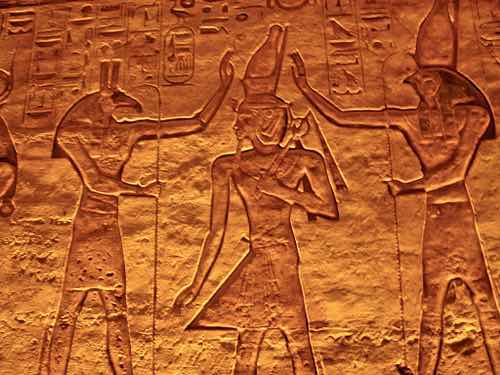
Set was the Egyptian god of the underworld. There are many stories, myths, and fables involving Set. Set was essentially, THE embodiment of evil. In the ancient Egyptian Myth, Set killed his brother Osiris. He was the Prince of Darkness. Each evening Horus, the Sun or solar deity that ruled the day, would do battle with Set who ruled the night. Set would win this battle and send Horus into the underworld. 

The two would fight throughout the night, and in the morning Horus would eventually overcome the powers of darkness to rise or ascend into heaven (Ouranos/Sky Greek: ουρανός). The next SUN/SET that you see may now have a different meaning to you.

Set had many names throughout the thousands of years that numerous forms of this myth prevailed. The following are some of the various names of Set, or that Set was identified with: 

Seth
Apophis/Apop/Apap/Apepi
Anubis
Sut
Sutu
Typhon
Toth
Sata

The last name in the list should look quite familiar even among the people of today's world ... SATA (satan).

One of the Ancient Greek Myth versions of Set was Typhon or Typhoeus. Here you’ll find some mythological history:

“A monster of the primitive world, who is described sometimes as a destructive hurricane (Typhoon), and sometimes a fire-breathing giant. According to Homer, he was concealed in the earth in the country of the Arimi ... In Hesiod, Typhon (the Greek for Set/Seth) and Typhoeus are two distinct beings. Typhon is represented as the son of Typhoeus, and a fearful hurricane ... Typhoeus ... is called the youngest son of Tartarus and Gaea ... He is described as a monster with 100 heads, fearful eyes, and terrible voices, who wanted to acquire the sovereignty of the gods and men, but, after a fearful struggle, was subdued by Zeus with a thunderbolt. He begot the winds, whence he is called the father of the harpies ... he was buried in Tartarus (hell), under Mount Aetna ... Typhoeus was identified with Set, who typified the power of darkness, the same power of darkness who slew Osiris.”

Satan, as a great serpent being chained in the underworld or “bottomless pit/abyss” (Rev 20:1-3) is drawing from the Typhon and Apophis imagery. As for the pit being bottomless or a great abyss, Greek myths mention that the underworld of Tartarus is as far removed from the earth's surface, as is heaven. Ancient Greek Myth imagery is once again being borrowed here.

Another very powerful myth from ancient Egypt that fit very well into the Biblical record of creation was the legend of the rebellion of Seth against Horus. Seth, a synonym of hatred and disobedience in Egyptian mythology, caused all sorts of troubles to befall man in revenge for his banishment by Horus and the rest of the “Egyptian Ennead.” The Ennead (or Great Ennead) was a group of nine deities in Egyptian mythology. 

“Know that in the minds of the early Egyptian Christians, Satan, as a parallel to Seth, became a rebel and the enemy of man, who began to lurk in ambush in order to drag him (man) into disobedience.”  
-Dr. Wlison B. Bishai 
Professor Emeritus of Arabic for the Department of Near Eastern Languages and Civilizations at Harvard University

And a quote from "The Christ Conspiracy"

“ ... Of course, the dualistic concepts of absolute good and evil did not originate with Christianity but are found long before the Christian era, particularly within Zoroastrianism. Satan is an adaptation of the Persian representative of evil “Ahriman,” the twin brother of “God (Ahura Mazda),” the same as the Egyptian Set, Horus's twin and principal enemy also known as “Sata,” the source of which comes “Satan.” Horus struggles with Set in the exact manner that Jesus battles with Satan, with 40 days in the wilderness, among other similarities, such as the revealing from the mount “all the kingdoms of Earth.” This myth represents the triumph of light over dark, or the sun's return to relieve the terror of the night (Darkness+Evil=Devil). Horus/Set was the god of the two horizons; hence, Horus was the rising sun, and Set the time of the Sun-SET. The origin of the “devil” also can be uncovered through etymology, in that the word comes from the Sanskrit term “deva” or the Persian “daeva,” both of which originally referred to angelic entities, usually female, who were demonized by Christian indoctrinators. In actuality, “devil” shares the same root as “divine.” In addition, “demon” is a Christian vilification of the Greek word “daemon,” which likewise referred to a divine spirit ...”

Also from “The Christ Conspiracy”

Now onto the use of the term “Lucifer (Latin).” Despite all the political intrigue, Lucifer (Greek: Phosphorus) simply means “Light bearer/bringer,” and he was in the earliest times a sun god, which is why he is called “Day Star, son of the morning/dawn.” The sun god Lucifer is “cast out of heaven” by the other angels (or stars), as night descends. This god/angel Lucifer is pre-Hebraic, found in Canaan, Egypt and Mesopotamia, and was not originally considered evil ...”
-C.C. (229)

So, those of you that are worried about Satan following you around and making people do things, as you can plainly see it was just a story that originated in ancient Egypt that sprang out of ignorance of the natural world. The church used it as a ploy to control people of the times that had no education and would easily fear these mythical entities.

In a deeper more esoteric and metaphysical level, allegorically, our ego is considered to be satan, devil, demon, anti-christ ... simply because it goes against the common good (God) for it's own ego-centric and selfish desires. So we see that satan is symbolic of the human ego, opposer to the Divine Spark of God. But more on that, in another writing.

Just a thought ... 

Justin Taylor, ORDM.


24 February 2021

PERSONIFICATION OF SATAN

PERSONIFICATION OF SATAN

The characterization and personification of “Satan” (Greek: σατανάς) (Hebrew: ha-satan) is portrayed to humanity in ever changing and varied images. The diversity of the images should be noted, particularly the diversification of forms “Satan” has taken on throughout history depicted by the images which have been catalogued, is not coincidental. 

Either these extremely varied pictures are all true to some extent and represent the “Satan” creature’s ability to morph like some kind of “shape shifter,” or there is no Truth to his being a real entity. 

In his poem, Dante portrayed the Devil as a grotesque, winged creature with three faces - each chewing on a devious sinner - whose wings blew freezing cold winds throughout Hell’s domain. In The Bible, there is no description of the Devil in any physical detail, and Historically by the end of the Middle Ages, the Devil had taken on the appearance of the horned, trident-wielding figure with a tail that has endured to modern times.

All the images of Satan are just many different depictions of many different imaginations that are based on imagery borrowed from ancient mythological creatures ... such as Pan. Pan being the nature demon that frightened everyone at that time. Pan’s fearful presence has carried on into our English language through words such as PANic and PANdemonium.

The primary meaning of the Hebrew word שָׂטָן (satan) is “an adversary, an opponent.” So in the Old Testament, satan (ha-satan) is commonly used to mean “an enemy”, either within or without. Biblically, in many of the places where this word is traditionally translated “Satan,” it should really be translated as “enemy or adversary." The Greek word σατανάς (satanas), comes from the Hebrew word satan, and has the same meaning: an adversary or enemy. 

We also find the use of the other word known as “Devil” in ancient texts. In the Greek of the New Testament, the word  “devil” (διάβολος/diabolos) most of the time meant a ruling evil figure. The underlying meaning of this Greek word is “false accuser, slanderer.” So once again, when we read “the Devil” in the New Testament, it refers to a very human reality: those who slander others and make false accusations.

These different graphic depictions can only be mental fabrications and constructs with no real model to base them on. So too is “Satan” himself ... a mental fabrication. Albeit, one in which many people believe to be real, in a physical sense.

The medieval period has been the most profound period of artistic depictions of what it is believed Satan looked like. The graphic images played a huge part in the conciousness of unsuspecting and unquestioning citizenry throughout that period, and assisted in setting up a belief that “Satan” was a physical being with a physical form ... and this horned being may well be the oldest deity reconized by humankind. 

Just like the fabrications of creative pagans and superstitious Christians of the past, the demons of the present day and of the New Testament period, were little more than mental constructs used to strike fear in the heart of mankind. That being said, know that the very word “demon” in the original Greek simply meant “spirit” (δαίμονας/daímonas), or Divine power. Nothing more. 

Although every culture assigned images to their concepts of their evil deity, the Truth of the matter is that the pagan nations each had their own multiplicity of Gods to worship, but that doesn’t make them real. These are non-existent, fabrications of men’s minds and were often made into statues and idols by the very hands of men. It is these “Gods” who were known as diamons/demons by the Ancient Greeks.

Although not specifically good or bad, they were believed to be “spirit energies” but eventually the Christians of old rejected the concept of “good spirit energies” and concluded ... these must be evil demons.

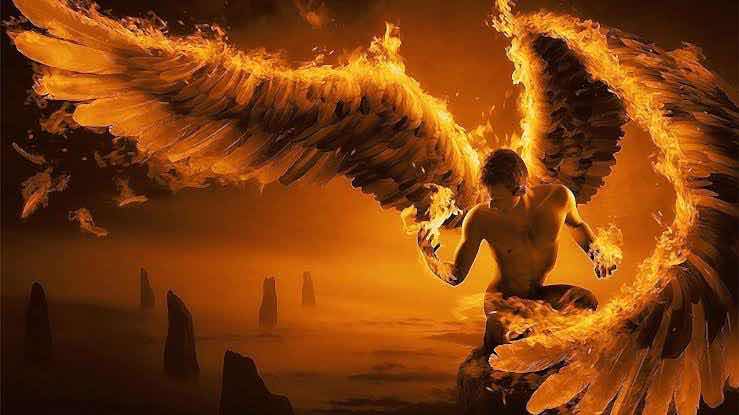
Today, many Christians believe the Devil was once a beautiful angel named Lucifer who defied God and fell from grace. This assumption that he is a fallen angel is often based the book of Isaiah in the Bible which says: “How art thou fallen from heaven, O Lucifer, son of the morning! How art thou cut down to the ground, which didst weaken the nations.” It is important to note that “Lucifer” isn’t a proper name but a descriptive phrase meaning “morning star or day star,” and can also be properly translated as “light Bearer or light bringer.” Lucifer is Latin, and in the Greek we find “Phosphorus” (Greek Φωσφόρος Phōsphoros) ... the Morning Star, the planet Venus in its morning appearance. 

The Latin word lucifer, corresponding to Greek φωσφόρος, was used in Jerome’s Latin Vulgate translation of the Hebrew word הֵילֵל (helel), meaning Venus as the brilliant, bright or shining one, in Isaiah 14 (Isaiah 14:12), where the Septuagint Greek version uses, not φωσφόρος, but ἑωσφόρος. As a translation of the same Hebrew word the King James Version gave “Lucifer,” a name often misunderstood as a reference to Satan. Still, the name stuck and the Devil is often referred to as Lucifer.

By the time the Christian movement had swept across the Western world, our language would reflect that reversed perception, the Greek term daimones, “spirit energies,” would become in the English language, “demons” ... and are considered to be evil. These spirit-energy creatures, had become Satan's little helpers. 

Throughout history, the Devil’s reputation as an evildoer hasn’t changed much. Most followers of the Christian Religion still believe he has literally wreaked havoc on the earthly plane, and is responsible for much of the world’s corruption and chaos. To find the real satan though, we must look within ... and find our own sensory based ego-driven choices that bring consequence rather than benefit to humanity. This, is the “Opposer,” the enemy, false-accuser, and adversary - and, in many ways - the Antichrist. 

Just a thought ... 

Justin Taylor, ORDM.


10 February 2021

WORD ANALYSIS OF PROPHECY

WORD ANALYSIS OF PROPHECY

Let’s start off with a little etymology. The English noun “prophecy,” appeared from about 1225 CE, from Old French profecie (12th century), and from propheteia - In the Greek - propheteia means “gift of interpreting the will of God.” In ancient times, a “Prophetic word” was when. someone said something unexpected, as if it came directly from God and not from them. From the ancient Hebrew, the term for prophet, “Navi,” literally means “spokesperson” ... One speaks to the people as a mouthpiece of their God, and to their god on behalf of the people. 

Let us not confuse prophecy with prediction. The future cannot be foretold simply because someone said they had a vision or a feeling. WE collectively create the future with each and every moment. All of us. The reality of the future is determined by our collective actions as the whole of humanity. In the original Hebrew, to "prophesy" was to speak one or more messages to others. Such messages typically involved Divine inspiration, interpretation, or revelation of conditioned events. This was to speak “as if it was God speaking.” It was not a specific foretelling of the future, unless it was based on karma ... cause and effect ... knowing what the same behaviour and thinking would bring manifest in form.

There is no possible way to predict the future, because the future does not exist. We only have NOW. This moment. The future is an unfolding of successional nows. If you believe that “God directs the path of the future,” then you would have to give up your concept of free will … which in itself is divinely inspired. The future, is what we make it. We can make it heaven, or hell. We choose ... we decide ... WE create it.

Now, for a moment, let me address the term “chosen people.” This phrase has wreaked havoc on the world, not because of what it IS, but because of what it is NOT.

The modern word JEW (the letter ‘J’ was not even created until the 1400's and still does not exist in Greek or in Hebrew) was a transliteration of the letter ”I”. Example, “Iesous: Ἰησοῦς” rather than “Jesus.” And for the word “JEW” ... it was “IEW,” and in Latin “IAO.” This was not a word to describe semitic peoples, i.e.: Hebrews, instead, it was a word to describe an illuminated state of divinity. In fact, the letters themselves tell the story. “I” the direct connection from Divine to man, Heaven (Spirit/Father) to Earth (matter/mater/Mother). The letter “A” is man, and Divine, duality reconnecting as oneness attached by the bridge between. And the “O” ... eternity, the 360 degree never ending circle, the Absolute ... the womb of the Universe, the origin and root of all things seen and unseen. 

Through careful initiation, and Inner Wisdom and revelation ... when one recognized the Divine Spark of the Creator within himself, he was elevated to the status of a IEW/IAO/JEW thus becoming a “Chosen One of God.” This was not reserved for only the Hebrew ... and they knew this back then. Because of incorrect translations from Hebrew/Greek/Aramiac/latin/English … there are countless errors in the beautiful esoteric scriptures preserved by the Hebrews, Greeks, Egyptians, et al. Research Kabbalah and Gnosticism for the true history of the Inner Mysteries that became destroyed through the literalization of esoteric (inner) scripture. 

Before we go to the next section, we should have a quick look at the etymology of the word “myth” (mythos). The word “myth” originates from the Greek language word mythos, meaning “word or tale or true narrative,” referring not only to the means by which it was transmitted but also to its being rooted in Truth. Mythos is that which is more than just literally true ... a deeper meaning or message beyond the fable or parable. Mythos was also closely related to the word “myo,” meaning “to teach,” or “to initiate into the Mysteries.” This is how the word was interpreted by Homer (7th or 8th century BCE) when composing his great works, including “The Iliad,” in which he meant to convey a Truth. Joseph Campbell described a myth as “something that never was, yet always is.” 

The Bible stories are myths (mythos) and are coded for allegorical and metaphorical interpretation. When converted to literal events and literal history, the magnificence of their teachings is lost ... and the world is turned against itself, rather than unified. These are stories of OUR ascension, OUR crucifixion, OUR resurrection and OUR rebirth. 

The “Holy Land” is NOT merely a geographic place ... scripturally speaking. It is WITHIN. “The Kingdom of Heaven/God lies within.” Jesus (the ego-MAN) is crucified at Golgotha (meaning the place of the skull). Within the skull of man lies the temple of God (hence the temple on the side of our heads). The Christ (Divine Spark of God), is resurrected within man, when the old man is put to death (ego vs. Divine/righteousness/Truth). 

The Bible is NOT HIS-story, but OUR-story. The NATION of Israel was destroyed in 70 CE by Titus and his Roman Army. That nation is no more. The re-established modern STATE of Israel is entirely different. In fact, the very name IS-RA-EL was a metaphor for IS-ISIS(divine feminine), RA-(divine masculine - sun god Amen-Ra), and EL-EL(a completed essence of God).

Just a thought ... 

Justin Taylor, ORDM.


29 January 2021

TOMB OF LAZARUS (EL-AZAR-US)

RAISING OF LAZARUS (El-Azar-us)

Before we fully enter this topic, its important to first understand the true meaning of the word “myth.” In the Greek, the etymology of “mythos” leads to: “speech, thought, word, discourse, conversation; story, saga, tale, anything delivered by word of mouth.” The word does not specifically mean that something didn't happen, rather that there is something deeper within the story that can be gleaned. Joseph Campbell said it best when he described a myth as “something that never was, yet always is.” 

In ancient Egyptian Myth, Horus the god of the sky and light, son of Osiris, god of the productive force in nature, travels to Bethanu to raise from the dead his murdered father. In this myth, there was also presented two sisters named Meri and Merti, as well as their brother El-Azar-us. The Egyptian name Bethanu means, “house of Anu,” and in its Sumerian origin Anu was the “first among the gods” and was recognized and honored as a god in Egypt.  This tale was well known throughout the ancient near-east world. It is from this ancient Egyptian story that the story of Jesus raising Lazarus from the dead originated and was placed among scripture.

In the Christian Gospel myth, the story goes that Jesus traveled to Bethany - a place that did not exist in Palestine in that time period of history - but it is a name that was obviously altered from the Egyptian location of Bethanu. But in John 11:1 (remember, John was not written until c.105-106) it is proclaimed “in the village of Mary and  Martha” (the Meri and Merti of the Egyptian tale) “a certain man was sick, Lazarus of Bethany.” Obviously, there was no great attempt to alter the Egyptian name El-Azar-us, probably from the assumption that few but Royalty - and men of power and wealth within the Roman Empire - would even know of this Egyptian story/myth.

According to the Gospels, Jesus did not go directly to Bethany upon hearing that Lazarus was sick. Instead, he responded by saying “This sickness is not unto death, but for the glory of God.”  Now it seems a bit callus to shrug off a person’s pain if it actually referred to some living person’s suffering. Remaining divinely indifferent, “he (Jesus) abode two days still in the same place where he was.” (John 11:6) Only then did Jesus say to his disciples that he would attend to Lazarus’ “sleep,” and that “I go, that I may awake him out of sleep.” (John 11:11) At face value, we have to conclude that the sickness had been “unto death” after all, for in verse 17, it says that Lazarus had “lain in the grave four days already.”

There is much ancient occult meaning behind all these claims that would take too much space to cover in one article, but suffice it to say that it all had to do with pre-physical energies moving into matter manifestation. This was NOT a literal story that was meant the be taken as historical. The “sleep” from which Lazarus was to be “awakened” concerned the four pre-physical states of development into form/matter/Life. This meaning is confirmed in verse 16 where it relates, “Then said Thomas, which is called Didymos (in Greek: the twin/Gemini), unto his fellow disciples, Let us also go, that we may die with him.” So obviously, THIS part has been averted from most church sermons on Sunday mornings.

Now ask yourself, why the curious use of the word “which” in reference to Thomas instead of the word who? And the suggestion of doubting Thomas Didymus saying they should go that they “might die with him” is comprehensible only when one knows the ancient teachings on the energies of Creation - the original intent of the story (esoterically/metaphysically). A hint of the answer is the fact that the word Didymus refers to the Zodiac sign Gemini, the twins, and represented the ancient lessons of mental matter. Therefore the “grave” in which Lazarus had allegedly lain “four days already” is occult terminology for the energy planes out of which form/matter/Life is risen.  

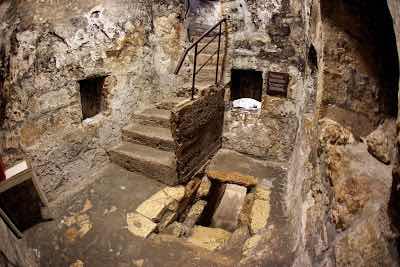
Further clarification is provided in stating that the “grave” of Lazarus “was a cave, and a stone lay upon it.” (John 11:38) In ancient teachings on Creation, the pre-matter energy planes - the void out of which Creation takes place - were always allegorized as a cave. The stone that is said to lay upon it simply symbolizes this dimension of Creation activity that we experience as physical Life. Jesus was born in a cave, Jesus was placed in a tomb/cave ... and Jesus resurrected (was born again) from this cave. It is all symbolism. All of it. 

Christianity is a conglomerate of hidden ancient Truths, Celestial Zodiacal cycles made godly ... Astrotheology, Cosmogony, myth, and metaphor. Read ... research. Don't rely on me or anyone else for your spiritual lessons and evolution. The Truth always lay hidden in the sands. Dig, and you will uncover much symbolism meant for esoteric revelation. 

Just a thought ... 

Justin Taylor, ORDM.


09 December 2018

THE TRAGEDY OF MISINTERPRETATION OF SCRIPTURE

TRAGEDY OF MISINTERPRETATION OF SCRIPTURES


Sadly today, most modern Christians are unable to accurately discern the deeper, mystical, inner levels of spirituality that are revealed in Biblical scriptures. They inherited a literal-historical presentation dating back to the Roman Empire and it's charge to create a literal Saviour based religion to unite and control the masses of the Empire. Science, history, and archaeology today still hints that much of the Bible's hidden mysteries are veiled and concealed from the majority of it's followers. 


In fact, todays Christian faithful are unaware that the ancient spiritual Wisdom contains keys that unlock the secrets of the hidden mysteries contained within the package of myth. Furthermore, trying to find these keys and reveal these ancient texts is difficult at best when dealing with English translations, taken from latin translations, taken from the original Greek and Hebrew languages. Remember that Revelation (Apocalypse of St. John) literally means an unveiling of that which is hidden. It so not the war to end all wars as has been perceived. 


Tragically, it is the people outside of the church system that have a better handle on what the ancient Wisdom was attempting to convey through allegory, metaphor, and myth. These researchers are the ones who possess the accurate understandings of the original scriptures and their predecessors. These hidden secrets deal with the spiritual evolution of the souls of mankind that lay hidden under the layers of parables, fables, and myth. 


Unfortunately, within countless denominations, Pastors, Priests, Ministers and the like are taught the dogmas and doctrines of their particular system much in the way a Ford Mechanic is taught how to repair Fords. Going to a Methodist Seminary for example, will teach you the ways of being a Methodist and the rules and rituals of the Methodist Church System. 


These Apologists, Priests, Pastors, and Seminarians are blinded to the Inner Mysteries (esoteric) and taught to present the Outer Mysteries (exoteric) to their congregations. There are TWO ways in which to interpret the stories in the Bible. One way, is as literal-historical real events, and the other as allegory, metaphor, and mystical ... metaphysical. Only ONE of these two is the correct and intended accurate manner in which to interpret what the ancients left behind for us to discover ... but not without a shovel. We have to dig through the layers and get to the roots. 


Unfortunately, most followers today rely on someone else from the pulpit to tell them what to believe instead of doing their own research and finding the Truth. All of the ancient writers of these scriptures veiled the true stories behind myth. These myths told deeper Truths that lay beneath the layers of what appeared to be a real event, location, or person. It is ALL allegory. It's Truth's were presented by earlier civilizations in exactly the same way except that the names and places were changed to fit the customs and traditions of the people. 


I should also mention the misunderstanding of the modern etymology of the word "myth." Myth comes from the Greek word "mythos." It doesn't matter if the literal event ever took place, because the Truth lies in the deeper lesson or message. Joseph Campbell said it best: "a myth is something that never was, yet always is." 


Now, It must be understood that in the Hebrew language, each letter of the aleph-bet (alphabet) had it's own symbolic meanings. Every word, name, geographic location; were all chosen to represent the inner meaning of the message that was being conveyed to those with eyes to see and ears to hear. 


When a Christian is asked if they are "spiritually discerned" as Paul had asked in 1st Corinthians, they say YES. However, when we look back at the original Greek and reference what "spiritually discerned" meant in the original Greek word "pneumatikos" we find that the meaning is that scripture is meant to be "figuratively, allegorically, metaphorically, mystically, metaphysically, non-literal, and non-physical." By interpreting scripture as literal-historical, the deeper spiritual message has been lost and history has been counterfeit. This falsely converts the Bible to a history book filled with presumed biographies of literal and historical persons and places. 


The modern Christian faith system is dependent upon historical events, simply because it separates itself from other religions by calling itself historical, based on historical events, historical miracles, a historical Saviour, a historical crucifixion and resurrection, and a historical wooden cross reserved for the suffering Saviour of Jesus Christ. This Jesus was presumably raised from the dead three days after his crucifixion. Therefore, modern Christianity is totally dependent on a historical literal Jesus dying and resurrecting ... as opposed to the ancient teaching of the dying and resurrecting Godman among many previous civilizations that was intended to describe what happens within each and every man esoterically. 


In reality, St. Paul (a Gnostic Christian), was speaking of the awakening and resurrecting Christ inside a person, NOT outside the person. He knew no historical Jesus. His Christ was Gnostic and esoteric ... part of the Inner Mysteries he had learned from the Mystery Schools of old. This is our darkness today. When we read the Bible literally rather than using the keys of allegory and myth. Luke tells us "look not here nor there for the Christ" because it is within us ... the Divine Spark of God. The story of Jesus, is OUR story, not HIStory. 


It was written for our benefit and for our spiritual journey back home from whence we came. It was written to benefit us as we sojourn in a foreign land ... Earth / matter. It is a guide, an archetype for us to follow esoterically as we travel through our earthly physical experiences as a spiritual being. Billions have gone to their graves not having learned the Truth. They still wait for a real historic Second Coming, a real historic Resurrection of The Dead, a real historic Rapture. These things will never occur ... literally or historically. They are spiritual metaphors for what takes place within us, not without us. 


Just a thought ... 


~Justin Taylor, ORDM., OCP., DM. 


21 January 2017

ANCIENT GREEK CREATION MYTHS

ANCIENT GREEK CREATION MYTHS

From the beginning, according to the myths of the ancient Greeks, the Greek world was created much like the story of creation and the story of Adam and Eve, in the Hebrew Old Testament Book of Genesis.

At first there was only Chaos, a shapeless mass of darkness and meaninglessness. Out of this Chaos came Nyx (night) and Erebus (the unfathomable deep). The first God to come into existence was Gaea, which means "Mother Earth" ... it is unknown where she came from or how she came into being. Ouranos (Uranus in Latin), "Father Sky (Heaven)," was born of Gaea as she slept. He became her husband, and together they had many children.

Their first-born children were, one, Hecatonchires - huge, powerful monsters with fifty heads and one hundred hands. Along the Hundred-Handed Ones, the Cyclopes were born - giants who had only one eye in the middle of their forehead.

The second born children, the Titans were born huge and powerful, like the Hecatonchires, but they were not hideous and uncontrollably destructive. Ouranos (Uranus), Father Sky, was harsh and cruel toward the Hecatonchires - he did not approve of their wild and destructive behavior.

They played with thunder, lightening, and earthquakes like weapons, and they were always fighting. It was believed that Ouranos feared that his powerful sons might topple him from his position as Lord of the Universe. Eventually, out of fear and ravenousness, Ouranos locked the Hundred-Handed Ones into a prison deep within the earth.

Naturally, Gaea was upset that Uranus had imprisoned the monsters. She turned for help to her youngest, Cronus (Time), who was the only one who had the courage to challenge Ouranos. After defeating his father, Cronus then took his place as "Lord of the Universe." But Gaea was sorely disappointed to discover that Cronus's REAL REASON for overthrowing Ouranos was simply to fulfill his OWN ambition. Now that he ruled the universe, Cronus had no intention of releasing his hundred-handed brothers from their dark prison.

Cronus married Rhea, another Titan, and together they had five children, who became Gods: Demeter, Hestia, Hera, Hades, and Poseidon. Like Ouranos, Cronus feared that his children might one day overthrow him. So each time Rhea gave birth, Cronus would then swallow the newborn God. However, since Gods are immortal, they did not die, but continued to grow inside of Cronus.

Determined to protect her sixth child from his father, Rhea gave birth in SECRET. She named the infant Zeus and sent him to the island of Crete, to be raised by nymphs. Then, pretending to obey her husband's cruel command that she surrender all their children to him, Rhea wrapped a heavy stone in a baby blanket and carried it to Cronus, who swallowed the stone without any notice.

As the young god Zeus matured, he became more and more powerful. When Rhea, thought him mighty enough to challenge Cronus, she told him about his five brothers and sisters trapped inside their father's body, and about how narrowly he had escaped the same fate.

With the help of his Grandmother Gaea, Zeus forced his father to regurgitate his five brothers and sisters, as well as the stone. The stone was taken to Delphi and left there. What Cronus feared all along became a reality. His children, who were led by their youngest brother, Zeus, waged war against him. However, Cronus was not left defenseless, he was backed by most of his brothers and sisters, the Titans.

The war between the Gods and the Titans was so terrible that it nearly destroyed the universe. The Titan Prometheus, whose name means "forethought," could see that Zeus and his siblings were destined to win this war against Cronus, so he abandoned his own brothers and sisters and joined the other team.

He secretly advised Zeus to release Gaea's first-born children, the Hundred-Handed Ones, informing him that they wielded thunder, lightning, and earthquakes as weapons. Once released, the monsters fought much harder against Cronus because he had betrayed his earlier promise to free them.

With the help of Prometheus and the monsters, the gods finally defeated the Titans. Cronus and his relations were then imprisoned at Tartarus, the deep bowels of the earth. Zeus, impressed by the effectiveness of the monsters' weapons, appropriated the thunder and lightning for his own use. From that time on, whenever Zeus grew angry, he hurled thunderbolts at the target of his rage.

With the entire world open to them after the war, the Gods chose the cloud-draped summit of Mt. Olympus to be their home. The only Titans who were welcomed into the counsel of the Olympian gods was Prometheus, who's advice had ensured their victory, and his brother Epimetheus, as a favor to Prometheus. Prometheus preferred to keep Epimetheus near him, because Epimetheus, whose name means "afterthought," lacked wisdom and commons sense.

Zeus assigned Epimetheus and Prometheus the task of populating the earth with mortal creatures. With that task, Epimetheus thoughtlessly bestowed so many gifts on the lower animals that when the time came to create man, there was nothing left.

The beasts already had the sharp teeth and claws, the warm fur and feathers, the tough, protective hides, the wings and shells, and speed, size, and strength. Epimetheus turned to his wise brother for help in figuring out what gifts to bestow on man.

Prometheus gave man a more noble, upright stance, so man would be above the beasts, with his face turned toward the heavens rather then down toward the ground. He also gave man an intelligence that reached much higher than the beasts' mere cunning.

Prometheus was partial to these men he had created, and he was always thinking of ways to benefit them. As Prometheus became more biased, his gifts became more lavish. He took a torch up to the heavens and lit it from the fire of the sun. He gave man this gift of fire, the gift that made possible all of man's arts, and that also made it possible for man to conquer the cold and the dark. With power over fire, man was indirectly given the possibility to obtain seats near the Gods. Anger flourished when Zeus realized that Prometheus had stolen the sacred fire of the Gods and given it to mortals. Zeus then had him chained for all eternity to a rock in the Caucasus.

Though time, power and control corrupted Zeus and he became weary that his sons would overthrow him, as he had overthrown his own father. He sent Hermes to ask Prometheus, who could see the future, which son would be his nemesis. Prometheus refused to reveal the secret, so Zeus found a way to make his punishment crueler. Everyday an eagle was sent to devour his liver, but every night the liver would grow back, making Prometheus's agony as eternal as his imprisonment.

His suffering lasted for many ages until, finally, he was freed through the good offices of Zeus's son Heracles, who begged his father to have mercy on Prometheus. Moved by Heracles's pleas, Zeus allowed his son to kill the eagle and to break Prometheus's chains. Thus Prometheus was freed at last.

During Prometheus's pain and suffering man was not left unpunished. Zeus commanded Hephaestus to fashion a woman out of clay. Up to that time, man had consisted entirely of males. So a woman named Pandora, meaning "all gifts," for she was endowed with every quality that would make her enticing and desirable. Zeus sent Pandora as a gift to Epimetheus, who gladly accepted the charming creature, even though Prometheus had warned him that Zeus was their enemy and they must never accept any gifts from him.

Pandora brought with her a box that her maker had given her. She was warned that she must never, under any circumstances, open the box, which piqued her curiosity. The day came where she could no longer bear the mystery of the box. She carefully lifted the lid. To her dismay, all sorts of hideous winged creatures came flying out of the box so fast that she could not shut the lid, the last of them escaping. Preconceiving that Pandora would eventually succumb to curiosity, all knowing Zeus packaged the box with every sort of physical and spiritual ill he could devise. Therefore, Plague, Famine, Misery, Despair, Hatred, Warfare, and many other forms of suffering escaped into a world.

After Pandora had slammed the lid shut, she heard a small fluttering sound from inside the box. Her curiosity arousing once more, lifting the lid once more, a small, delicate creature with golden wings flew out; its name was Hope.

And that, was how the Ancient Greeks explained the process of creation and how the world came into existence. Each civilization had their own unique myths of how the world came into existence. Ultimately, they all got meshed together across multi-civilizations and mythical fables and allegories. So, until we can really figure it out, my suggestion is that we enjoy our time here in this incarnation, be kind to others, spread love and compassion among humanity.

Just a thought ...

~Justin Taylor, ORDM., OCP., DM.